

Estimate-first mobile sites

Home Service Website Design for Contractors, Trades, and Local Service Businesses

A home service site has one job: turn map-pack clicks and referrals into calls, texts, and estimate requests — on a phone, in under three seconds. We build estimate-first mobile contractor sites for Tampa Bay trades with real service silos, local SEO, schema, and GBP alignment — not brochure templates that lose impatient homeowners.

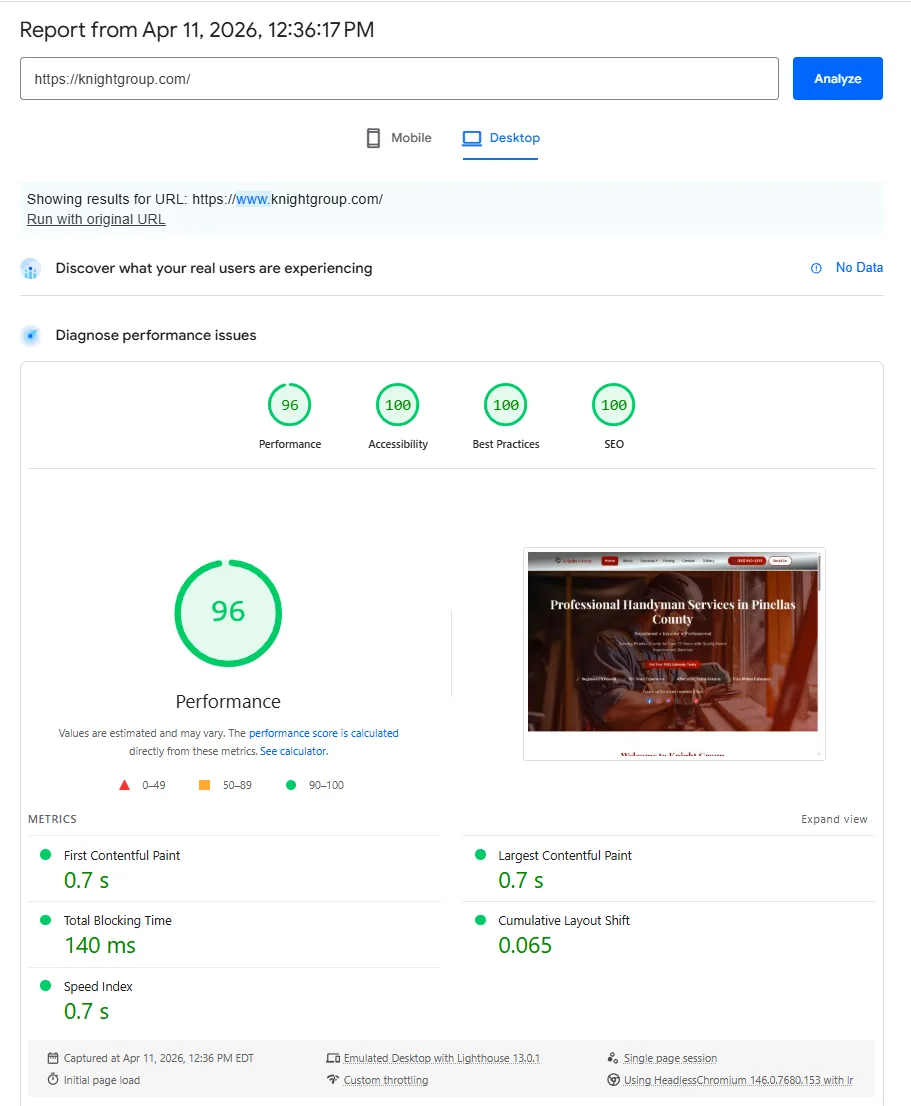
96 Mobile Lighthouse — Knight Group handyman site
97 Indexable pages — KG growth architecture
Call-first Estimate CTAs above the fold on every silo

Brochure sites lose the map-pack comparison

Most contractor websites look acceptable on desktop but miss what matters when someone searches on a phone with a leaking roof or broken screen. One generic services page, weak geography, no schema, slow builders, and proof buried three scrolls down — that means brand-name searches only, poor mobile conversion, and map-pack clicks that bounce before the estimate form loads.

Lane 1 — Mobile conversion

Homeowners decide on phones — speed and CTAs are not optional

Pinellas and Hillsborough homeowners often compare two or three companies from the map pack before they dial. Estimate-first CTAs only work if the page loads on Slow 4G and the next step is obvious in the first viewport.

  1. Click-to-call and estimate paths Sticky mobile call bars, short forms with job type and ZIP, and clear “what happens next” copy — not a lifestyle collage with the phone number in the footer.
  2. Core Web Vitals as build criteria We treat mobile lab scores as part of the contractor website build — compressed hero media, lean scripts, and hand-coded HTML instead of bloated page builders.
  3. CTAs on every silo Estimate buttons belong on service pages and city pages — not only the contact page. Map-pack sitelinks should land on conversion surfaces.
Screen Team LLC mobile homepage with call-first contractor layout
Lane 2 — Service architecture

Drywall repair does not rank like screen repair or painting

Home service searches combine trade intent and geography. One catch-all Services page cannot capture how Tampa Bay homeowners actually search — or give Google enough structure to match queries to your offers.

  1. Distinct service silos Separate URLs per repair or install intent — handyman silos, enclosure pages, painter interior vs exterior, electrical residential vs commercial.
  2. City pages when justified Geography depth only where you truly mobilize with unique local utility. Thin city spam hurts more than it helps.
  3. FAQ and objection blocks Licensing, deposit, storm response, and timeline answers on-page — with FAQ schema so Search and AI summaries can cite real copy.
Knight Group handyman website mobile service layout
Lane 3 — Local SEO & GBP

Website and Google Business Profile must reinforce each other

Map-pack relevance breaks when categories, services, photos, and website URLs tell different stories. The site supports what GBP targets through local wording, service coverage, schema, and internal linking.

  1. Schema from launch LocalBusiness, FAQ, and BreadcrumbList validated in Search Console — not bolted on after a redesign.
  2. Analytics baseline GA4, Clarity, and GSC wired before you scale ads or outreach — so you know which pages earn impressions and which CTAs produce calls.
  3. GBP parity checklist Categories, service list, photos, and website URL aligned so organic and map-pack clicks reinforce the same offer.
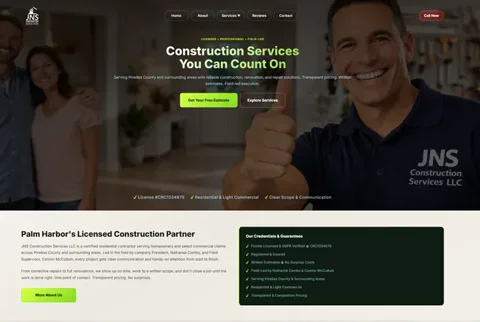
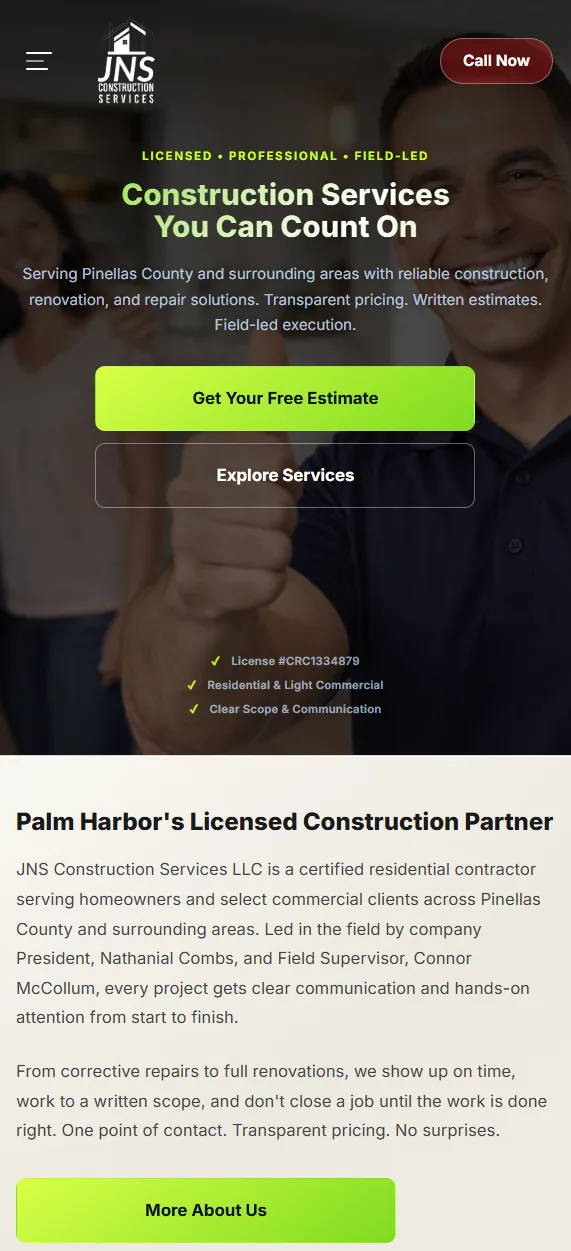
JNS Construction contractor website mobile layout
Lane 4 — Proof near the ask

Trust signals belong beside estimate CTAs — not on a separate gallery page

Skeptical visitors convert faster when proof sits next to the button: reviews, scope clarity, service area honesty, and before/after context for the job type they searched.

  1. Job galleries per intent Painting, enclosure, handyman, and land-clearing proof paired with the service silo that earned the click — not generic stock photography.
  2. Direct-contact language Licensed, insured, and service-area copy that matches what your team can legally take — especially for emergency and storm-response queries.
  3. Growth systems after the front door CRM outreach, Email-Agent, and referral tracking scale what the website already earns — see home service growth systems when estimate volume justifies ops lanes.
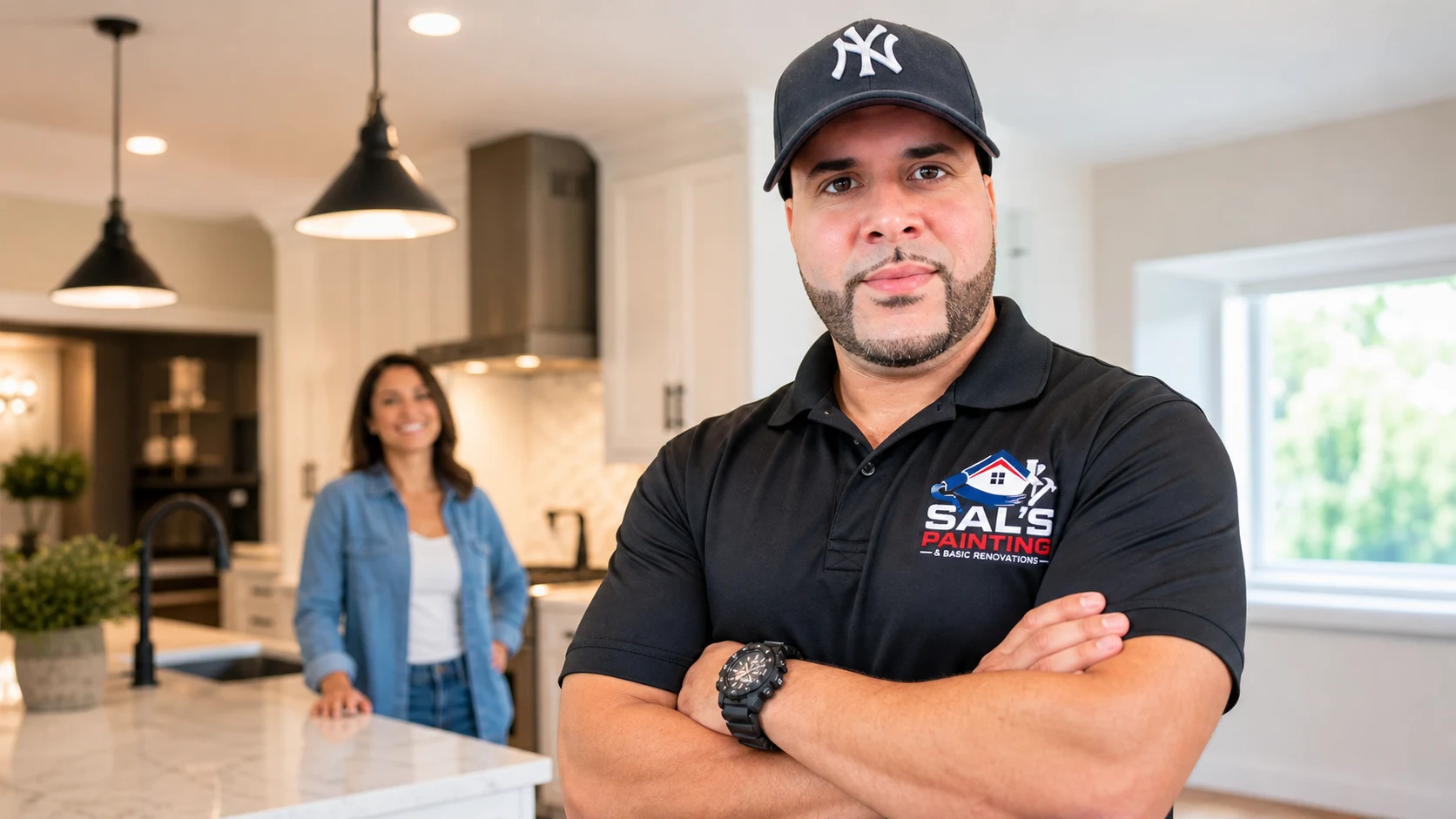
Sal's Painting mobile website hero with estimate CTAs

Mobile contractor sites — speed and conversion proof

Live Tampa Bay home service builds with estimate-first mobile layouts and lab speed targets — not generic agency mockups.

Knight Group mobile PageSpeed Insights lab report showing 96 performance

Mobile lab Slow 4G target

Call-first pages that still score under mobile lab

Knight Group’s hand-coded build targets 96+ mobile performance — estimate CTAs, booking surface, and 36 service silos without a page-builder penalty. Speed is part of conversion architecture, not a post-launch polish pass.

  • Click-to-call and /booking estimate surface on mobile
  • Lean scripts and compressed hero media
  • 97-page architecture scaled to real service coverage
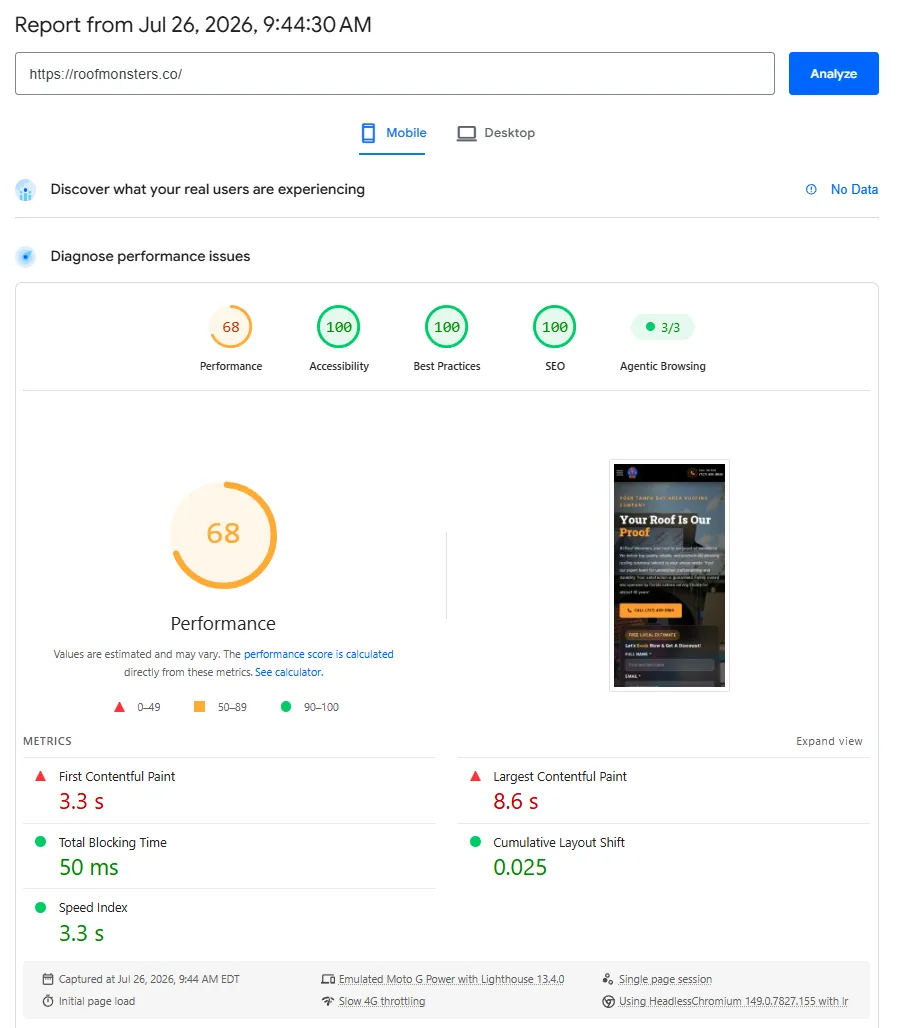
Screen Team LLC mobile homepage hero showing call-first layout

Conversion Screen Team — Tampa Bay enclosure trade

Mobile hero that asks for the job in the first viewport

Home service websites should lead with the offer and next step — clear service label, primary CTA, and trust proof near the ask. Screen Team pairs this pattern with 81 indexable pages, schema, and quote paths across the full growth stack.

  • Estimate and call CTAs above the fold
  • Service + city page depth for local SEO
  • st OutreachEngine and Email-Agent when ops lanes activate

How a home service website launch runs

Scoped to your trades, metros, and how customers actually book — not unlimited city-page packages.

1

Offer & coverage map

List the jobs you want to win and the Pinellas/Hillsborough metros you honestly serve.

2

Information architecture

Service silos, justified city pages, FAQ blocks, and proof galleries with estimate CTAs on every intent.

3

Hand-coded build

Performance-first pages, schema, analytics, Search Console, and mobile call paths — Wix/WordPress rebuilds when the platform is the bottleneck.

4

GBP parity

Categories, services, photos, and website URL aligned so map pack and organic reinforce each other.

5

Launch measurement

Track which pages earn impressions, which CTAs produce calls, and what to expand next — outreach and inbox routing follow when estimate volume justifies.

Who this is for

Contractors, handymen, electricians, painters, plumbers, screen repair, fence and deck companies, and renovation support businesses that need a stronger online front door than a generic builder template.

Convert

Call-first mobile design

Click-to-call, quote buttons, clear service labels, and fast load times where most local searches happen.

Structure

Service-specific pages

Real page architecture per trade intent — not one catch-all block trying to rank for every job type.

Discovery

GBP & local SEO alignment

Schema, service-area pages, and map-pack messaging tied to real geography.

Trust

Proof & galleries

Reviews, job photos, and scope clarity beside estimate CTAs — not three scrolls below the fold.

Related proof & examples

Live Tampa Bay contractor sites — mobile layouts, speed proof, and growth-system depth.

Common questions

How is this different from a generic contractor template?

Templates rarely give each trade intent its own URL, estimate-first mobile CTAs, or GBP-aligned schema. We build structure around how Tampa Bay homeowners search and book — hand-coded when speed and control matter.

Do I need city pages on day one?

Only when you truly cover those metros with unique local utility. Thin city spam hurts more than it helps — we scope geography after coverage is honest.

Can you rebuild an existing Wix or WordPress site?

Yes when the platform is a conversion or speed bottleneck. Some projects keep a cleaned CMS; others move to a hand-coded stack for Core Web Vitals and tighter control.

What about pricing?

Scoped per service count and geography depth after an audit — you are buying conversion architecture, not unlimited city-page packages. See pricing for package anchors.

When should CRM or automation come later?

After the website and GBP produce a steady estimate stream. Outreach and Email-Agent routing scale what the front door already earns — documented on home service growth systems.

Is this the same as a full growth system?

This page is the website and local SEO front door. Full growth systems add CRM outreach, Email-Agent, social queues, referral tracking, and field dispatch when your team will open them daily.

Who should start with the free audit?

Any home service owner unsure whether the next move is service pages, GBP cleanup, speed fixes, or a full rebuild. The audit shows gaps before you spend on the wrong scope.

Website scope scales to your trades and metros — see pricing or book a consult for a written estimate.

Ready to fix the mobile front door?

Start with the free audit — we will show whether service pages, local cleanup, GBP work, or a full rebuild is the right next move for your trade.

Get the Free Audit