EvidenceDesk AI turns a complex legal-document workflow into a trust-first product website.
This audit-backed case study is based on the live EvidenceDesk AI product and its current application structure, not a mockup. The site packages a sensitive document-organization service into three paid tiers, a consumer intake flow, an attorney-specific funnel, security and retention pages, and a clear handoff from interest to upload.
For Knight Logics, this is the kind of project that matters more than a simple brochure build: positioning, scope control, compliance-sensitive UX, paid conversion paths, and route architecture all have to work together without crossing into legal-advice claims.
Home, about, intake, attorney, security, sample-packet, resources, and policy surfaces auditedThree live package tiers with distinct entry pointsTrust-heavy positioning for a sensitive service category
3package tiers
11core public routes
2buyer journeys
4workflow steps
Product site walkthrough
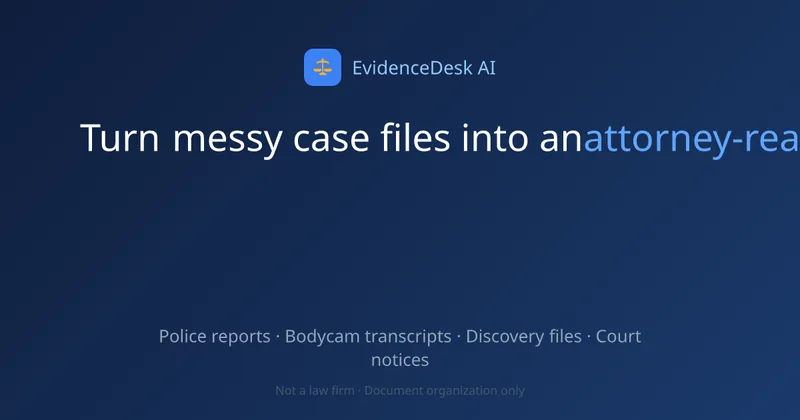
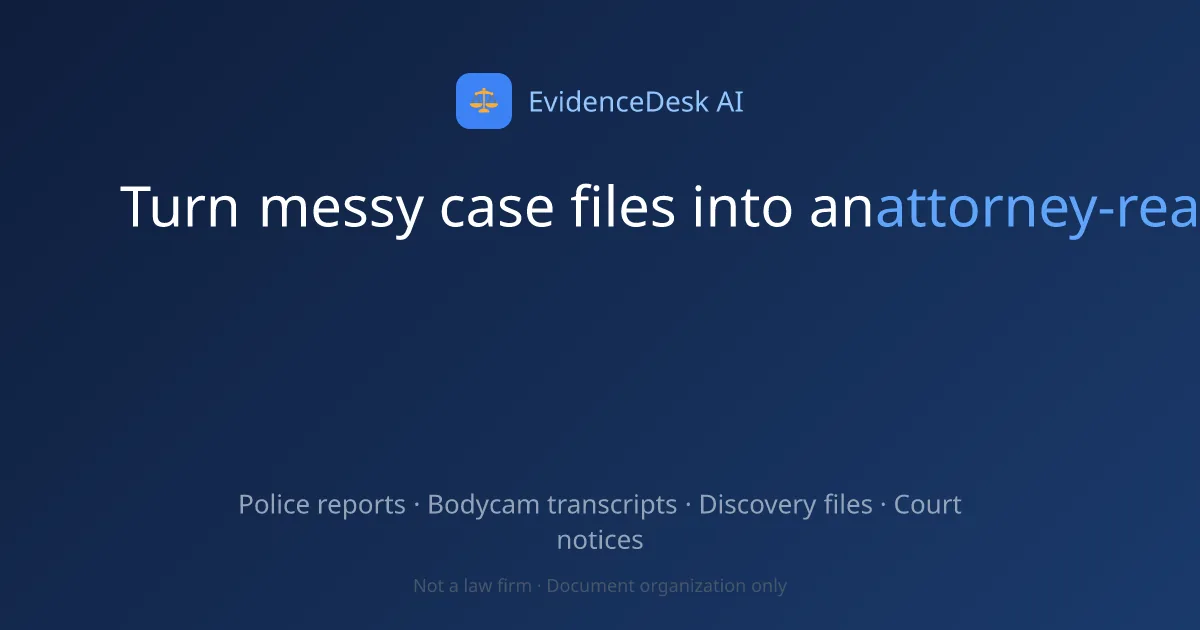
Live product preview stays in the hero panel above. This section shows the EvidenceDesk brand mark plus conversion-architecture craft — no second copy of the same OG image.
EvidenceDesk AI brand mark from the client workspace.
Legal-tech product Intake → trust surfaces
Attorney paths, security pages, and conversion routing on evidencedeskai.com
EvidenceDesk is a sensitive-document product — the public site must explain packages, security posture, and attorney-specific flows without feeling like a generic SaaS template.
Next.js product site with Stripe and Supabase-backed intake
About, security, privacy, terms, and sample-packet trust pages
Product homepage Showcase still from the EvidenceDesk workspace — package hierarchy above the fold.OG card Social and listing preview art for the live product domain.EvidenceDesk AI Mobile viewport from evidencedeskai.com (PII redacted).
Landing page positioning, package hierarchy, and conversion routing
About, security, privacy, terms, sample-packet, and contact trust surfaces
Attorney-specific page for firms evaluating packet support
Client intake flow and upload handoff architecture
Resources and route structure around a sensitive, document-heavy product
Next.js 14TypeScriptTailwind CSSStripeSupabaseOpenAIPDF / ZIP packet workflow
Why this matters
EvidenceDesk AI is stronger proof than a normal marketing site because the real challenge is product clarity.
The service has to explain what it does, what it does not do, who it is for, how files are handled, how pricing differs by case state, and how attorneys fit into the process. That is a harder design problem than a standard service page because the wrong positioning immediately creates trust, compliance, or scope confusion.
Knight Logics handled that by separating the product into distinct paths: request-roadmap buyers, document-ready buyers, and attorneys evaluating packet support for their firms. The site also reinforces scope repeatedly with plain-English disclaimers, security language, retention notes, and sample-output previews so visitors understand the service before they are ever asked to upload anything.
That combination of conversion architecture, route depth, and operational clarity is what makes EvidenceDesk AI a valuable case study on the Knight Logics site. It demonstrates product thinking, not just styling.
Build decisions
What Knight Logics built into the product website
The strongest part of the project is not a single hero section. It is the way the site keeps persuasion, trust, and scope boundaries working together across the whole customer journey.
Clear package architecture
Three distinct offers let visitors self-select based on whether they need a request plan, already have their files, or need a more involved binder workflow with multi-round organization.
Separate attorney funnel
The attorney page reframes the same system for firms: fewer consumer explanations, more workflow efficiency, packet credits, and review-ready outputs for licensed professionals.
Trust and compliance surfaces
Security, retention, no-legal-advice language, model-training limits, and review requirements are spread across the experience instead of hidden in one policy page.
Operational handoff readiness
The front-end is backed by intake, upload, and payment flows that support an actual delivery process, making the site feel like a product system rather than a landing page that stops at the form.
Route map
Live site surfaces that make the product credible
This is where the audit becomes useful for the Knight Logics case study: the product is supported by route depth, not just homepage copy. Each cluster exists to answer a different trust or conversion question.
Acquisition and conversion
Pages that explain the offer, route visitors into the right package, and move them toward purchase or intake.
Dashboard, admin, and API route structure verified in the application audit
Checkout and packet delivery supported by product-level back-end wiring
Product outputs
The deliverables are specific enough to sell the service without overpromising legal outcomes.
That balance matters. The site names what the customer receives in operational terms, while staying disciplined about not claiming legal advice, legal strategy, or representation.
Chronological case timeline
A clean event sequence helps attorneys or public defenders understand the file set faster.
Evidence index
Files are mapped to source and relevance so the packet is easier to navigate than a loose folder dump.
Witness chart
Roles, names, and statement context are organized into a faster review format.
Missing-document checklist
The service identifies what still appears to be missing without pretending to replace legal case strategy.
Contradiction chart
Report, bodycam, and witness mismatches are framed as factual review support rather than conclusions.
Attorney question list
Neutral follow-up questions help the client bring a more organized conversation into their legal review.
Case study value
Why EvidenceDesk AI belongs on the Knight Logics site
This project shows a broader range than local business websites alone. It proves Knight Logics can package a more difficult offer where product clarity, legal caution, conversion design, and systems thinking all matter at once.
More than visual design
The project required product packaging, scope language, pricing structure, and route planning, not just a polished layout.
Trust before conversion
The site earns the upload and payment ask by answering security, retention, and service-boundary questions throughout the experience.
Actual operational depth
EvidenceDesk AI is backed by intake, upload, attorney, and packet-delivery surfaces that reflect a real product workflow instead of a thin lead form.
Next step
Want a site that has to explain a complex service clearly and still convert?
That is where Knight Logics is strongest: translating operationally messy offers into pages, flows, and systems that make the business easier to understand and easier to buy from.
Legal-tech buyers need trust, clarity, and intake routing — not a generic startup landing page. We structured attorney paths, security content, and conversion architecture.
Is this a full SaaS build or a marketing site?
A conversion-ready product website and information architecture engagement — the public face of the product, not the entire backend platform.
Can you do similar for other B2B products?
Yes. We specialize in trust-heavy funnels, role-based pages, and intake flows for complex B2B and professional services products.
Where can I see the live site?
Visit evidencedeskai.com for the live product site, then book a consult if you want a similar structure for your product.