Knight Logics founded
Founded in Safety Harbor, Florida, with a focus on hand-coded websites, local SEO, and practical automation for local businesses.
That includes hand-coded websites, local SEO cleanup, Google Business Profile improvements, workflow automation, and shipped Windows software. The goal is straightforward: build digital infrastructure that actually makes a business easier to find, trust, and run.
Public proof surfaces
The photo is current. This page still leads with shipped products, case studies, and GitHub releases as the primary credibility path — no stock or AI-generated portrait.
What Nicholas Knight Does
Nick works at the intersection of technical SEO, conversion-focused websites, Google Business visibility, and process automation. The common thread is that the work has to ship cleanly and hold up in production, whether that means a faster local-service website, a cleaned-up GBP, or a desktop tool distributed through GitHub Releases.
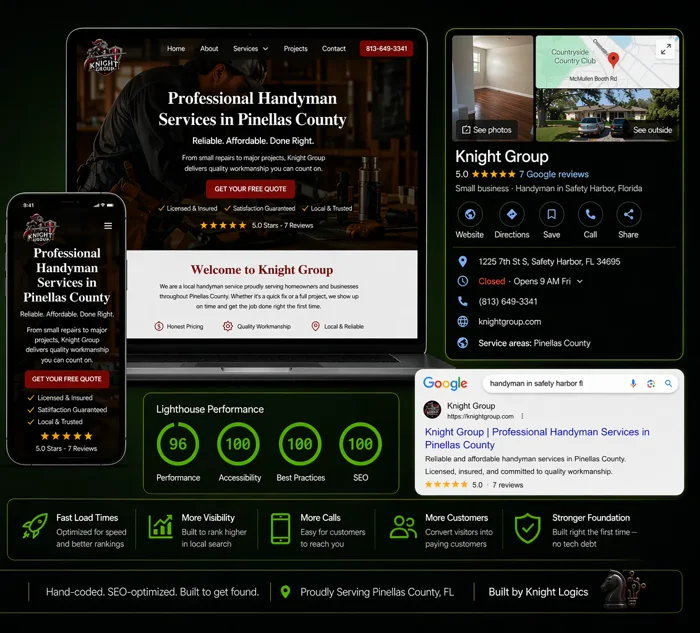
Knight Logics is also intentionally public about proof. The strongest validation is not generic agency copy - it is shipped pages, real case studies, public product releases, and a site architecture that can be crawled and understood.
There's no account manager layer and no handoff between a "strategy" team and a "build" team. Scope gets defined, then the same person who scoped it writes the code, configures the SEO, or packages the release. That keeps decisions fast and keeps the person answering questions accountable for the thing they shipped.
Most engagements start the same way: look at what currently exists (a website, a GBP listing, a manual process), find the specific bottleneck, and propose a scoped fix instead of a full rebuild by default. A rebuild happens when the underlying structure genuinely can't support the goal - not as the default answer to every intake call.
Operating Context
Local focus matters because many projects depend on map-pack relevance, service-area targeting, review systems, and business trust signals - not just generic web design.
That doesn't mean every client is local. It means the default lens for a website or SEO project is "will this hold up in a map pack and a mobile search result," which is a stricter bar than a generic brochure site needs to clear. Desktop app and automation work is less geography-dependent and gets evaluated on a different bar: does it actually reduce manual effort or ship a feature that works.
Timeline
A short, factual timeline rather than a highlight reel — dates come from Knight Logics’ own published records and GitHub release history.


Founded in Safety Harbor, Florida, with a focus on hand-coded websites, local SEO, and practical automation for local businesses.
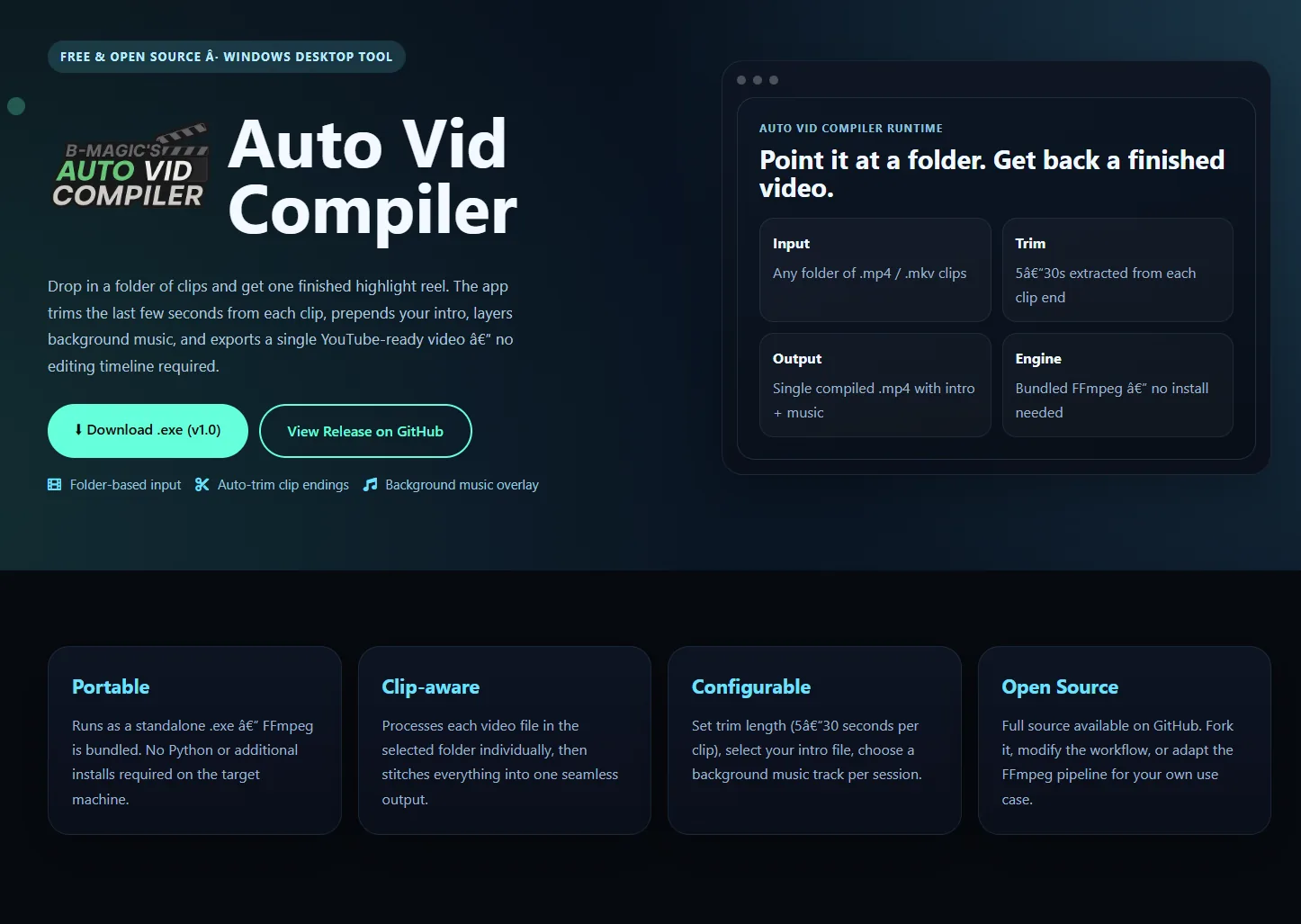
The first public Windows desktop app — a folder-based highlight-reel compiler distributed through GitHub Releases.
A per-monitor display protection utility with tray-first controls, idle detection modes, and persistent settings.
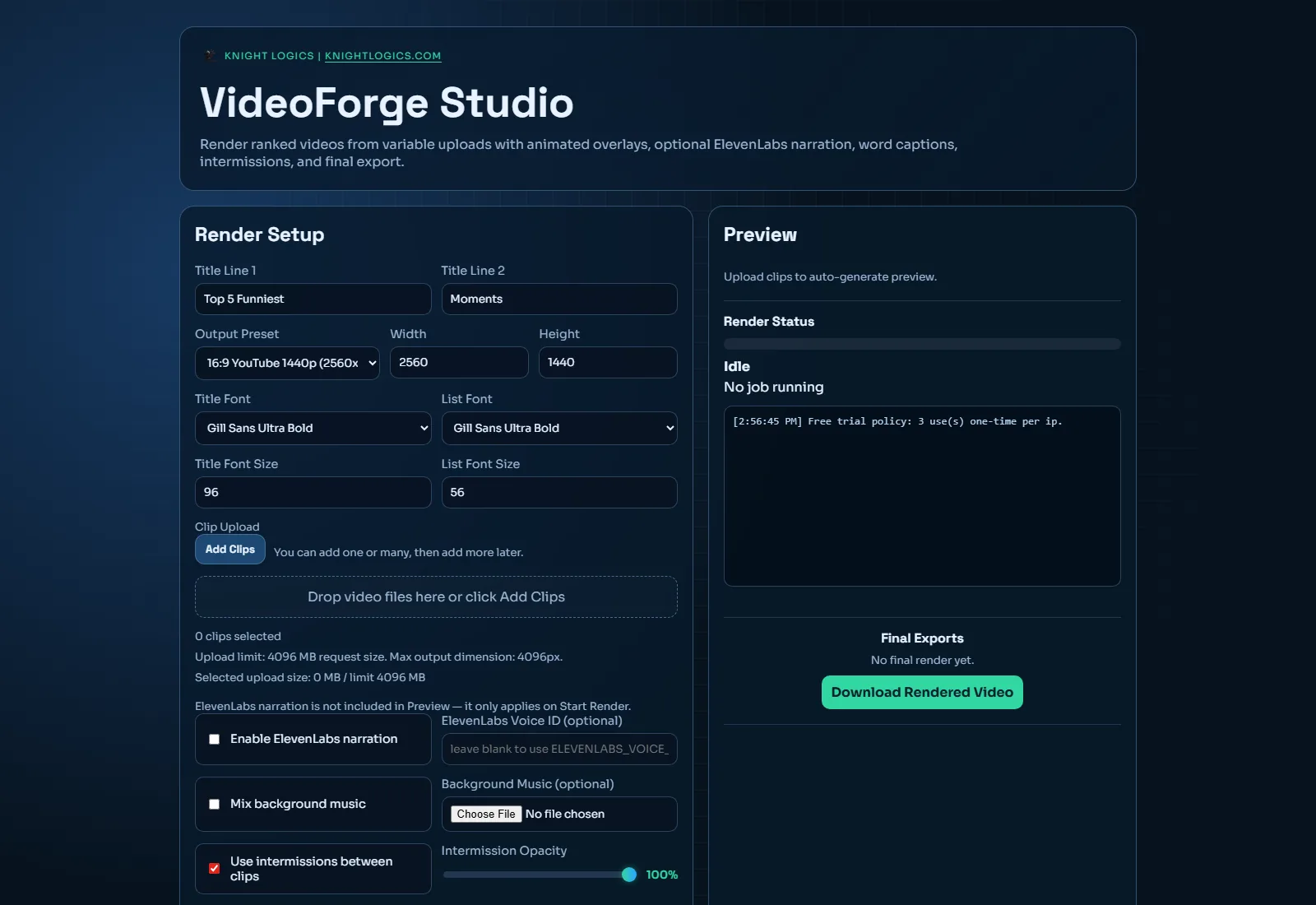
A local-first ranked video production app with FFmpeg rendering, overlays, and optional narration.
Verification Paths
These are the strongest public surfaces for understanding what Nicholas Knight actually builds and how Knight Logics positions that work.
Custom-coded brochure sites, local-service builds, schema, Search Console setup, and performance-focused launch work.
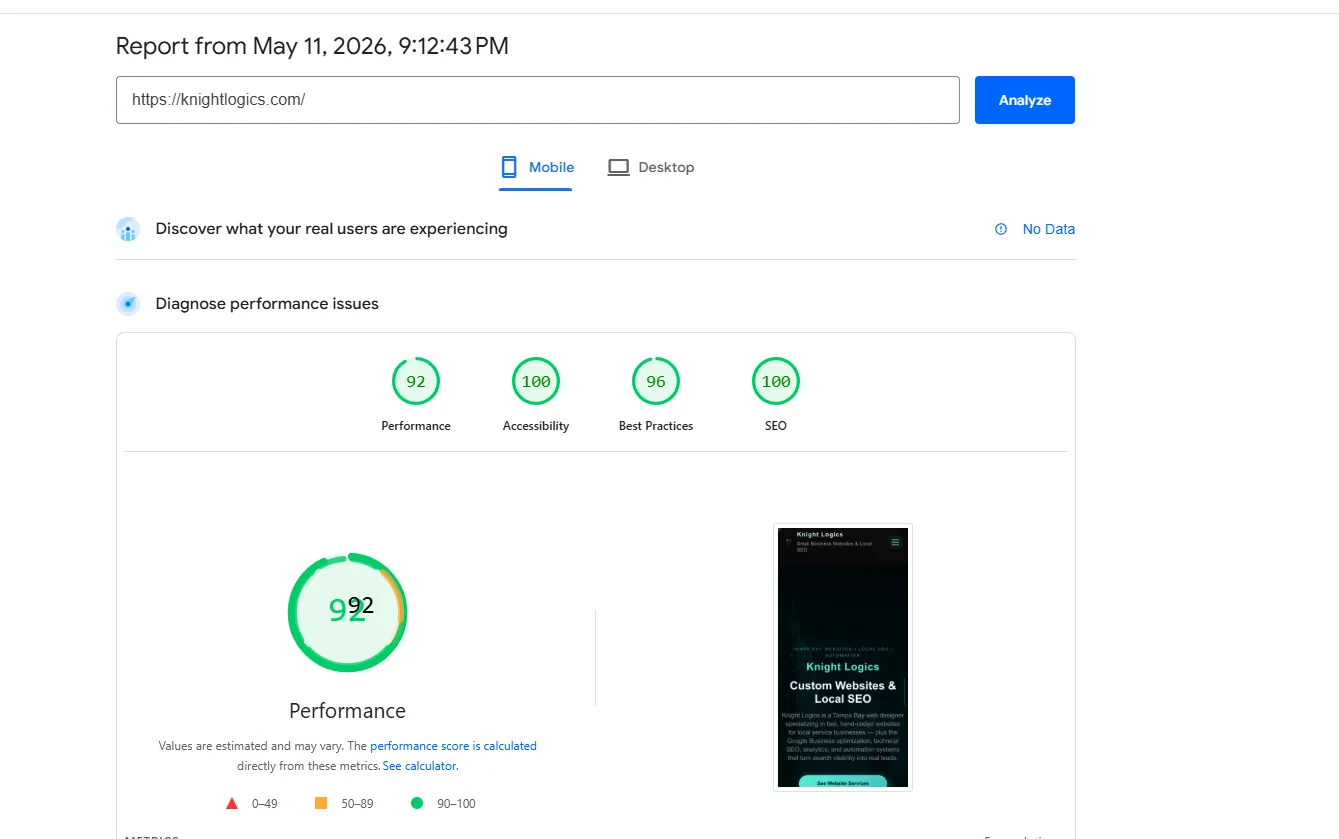
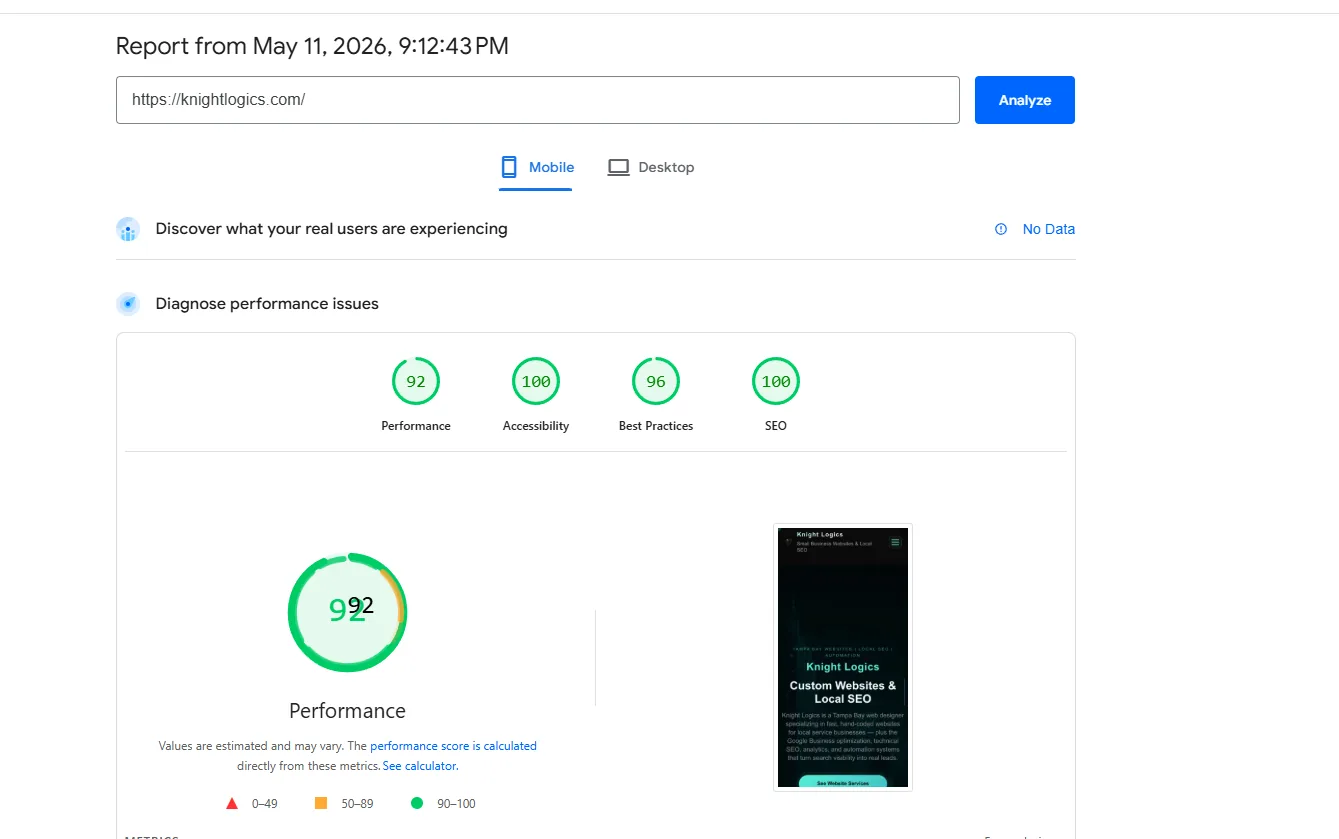
The site itself is a public example of the SEO, structured data, internal linking, and performance work being sold.
Lead routing, internal tooling, scheduled workflows, and API-connected business processes built around actual operational bottlenecks.
Public app pages and GitHub release distribution for Display Control+, PixelForge AI, VideoForge Studio, and Auto Vid Compiler.

FAQ
No. The work is positioned more like a founder-led studio: direct collaboration, scoped implementation, and a bias toward shipping practical systems instead of inflating process.
Public proof. That includes real case studies, product pages, GitHub repositories and releases, structured-data validation, and live business websites built for local discovery.
Local service businesses, founder-led operators, and teams with obvious visibility or workflow bottlenecks are the strongest fit.
Yes. The local footprint helps with Maps, GBP, and local-search positioning, but project delivery can still be remote when geography is not the limiting factor.
Yes, on the core deliverables - website builds, SEO/schema work, and the shipped desktop apps listed above. There is no separate build team a project gets routed to.
Each one links to a public GitHub repository with tagged releases, a version history, and a direct download - not a screenshot or a "coming soon" claim.
Fewer meetings about the meeting. Scope gets agreed on directly, then built directly, so a change request does not have to travel through an account manager before it reaches the person who can actually implement it.
That gets flagged as soon as it's found, with a revised estimate before more work continues - not discovered after the fact in a final invoice.
If the project needs direct strategy, technical cleanup, or a build path that does not rely on templates and handoffs, use the contact page and describe the current bottleneck.